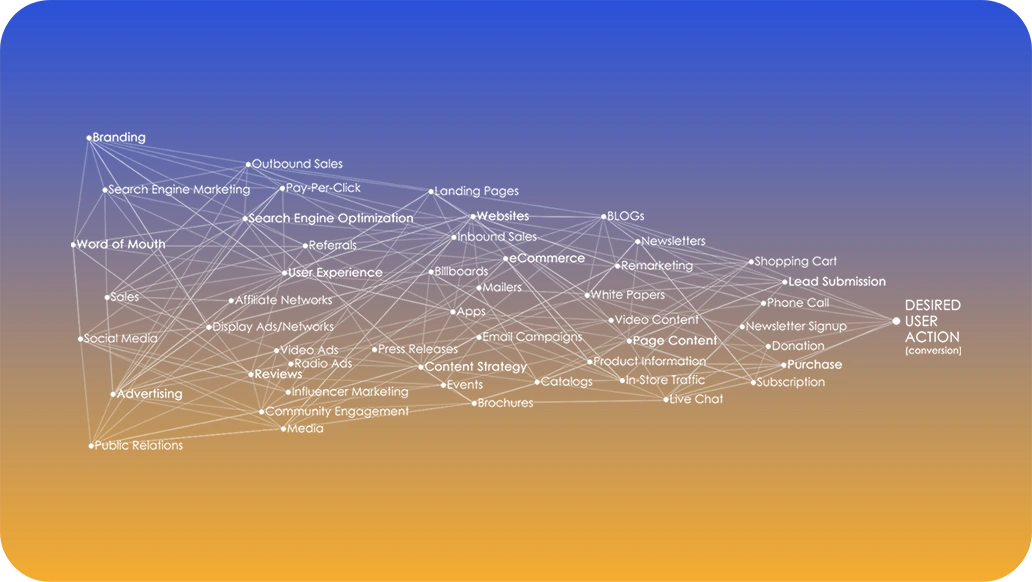

At its best, creativity in advertising and storytelling is not random inspiration. It is disciplined exploration. The scientific method gives us a cycle: observe, hypothesize, test, refine. A great creative process mirrors that same rhythm.
When you apply the scientific method to creative work, you bring structure to imagination. The result is not only more effective campaigns but also a repeatable process that builds confidence and clarity across teams. Creativity becomes a method, not just a moment of luck, and results become more consistent because you can trace why an idea worked or why it didn’t.
Observation as the Starting Point
Every experiment begins with observation. In creative work, this means gathering context before jumping into ideas. It is tempting to start with a brainstorm, but without background knowledge, the best ideas risk floating away untethered. Observation grounds creativity in reality.
What is happening in the market right now? What do we know from past campaigns? What pressures, trends, or opportunities are shaping this moment?
By looking at the environment first, we give our creativity a sharper lens. For example, if you are preparing a campaign for a financial services client, observing that interest rates are rising or that customers are seeking stability can influence the tone of the entire message. Without those observations, you might miss the urgency or overlook what customers truly care about.
This stage is about context, and context matters. It frames everything that follows.
Defining the Audience
The Science of Advertising asks, What problem are we solving? Targeting asks, Who are we solving it for? Both questions demand precision.
Defining the audience is more than just writing down a demographic. It requires understanding behaviors, motivations, and pain points. It means asking what gets in the way of your audience taking action and what would make it easier for them to say yes.
Imagine you are developing a campaign for a new piece of productivity software. Your target audience might be managers who feel overwhelmed by too many tools. Knowing that, you can speak directly to their frustration. Instead of a generic message about efficiency, you focus on giving them back control of their time. That sharper understanding becomes the difference between work that blends in and work that breaks through.
Setting the Objective
Like Science, objectives must be clear. Develop a treatment plan to increase liver cancer survival. Drive attendance to a Webcast to increase awareness about a problem that your product answers. Link to a white paper that discusses a problem that your solution makes right.
Scientists form hypotheses to test out theories. Like the creation of a scientific theory, creative work requires a leap in reasoning. That leap leads to a critical insight. When the insight is correct, it reaches the audience more clearly and more powerfully than ever before.
A critical insight, like a theory, is a testable proposition. It either confirms the direction is right or reveals that it is time to rethink the approach.
This message to this audience in this context resonates.
Take first-time small business owners who need payment systems. They are looking for simple products that can be deployed quickly and easily. Plus, they don’t have a lot of time time to spare.
The critical insight explains why now. It reveals the connection between the brand, the audience, and the cultural or business moment. It answers the deeper need that the communication will meet.
For example, people are not really looking for software features. They are looking for control over chaos. A campaign that speaks to control feels more urgent and more human than one that simply lists features. That single insight can reshape the entire direction of a creative platform.
Without an objective and critical insight framed this way, creative becomes art for art’s sake. With it, creative becomes more objective, purposeful and testable.
Once you have your background, target audience, objective, and critical insight, you need the right strategic focus to bring it to life and test it. This is the logical next step in reasoning.
Building Strategic Focus
Every scientific experiment has a hypothesis. In creative work, that hypothesis is the strategic focus, the single-minded idea you are testing. This is the statement that gives clarity to everything else.
What is the central takeaway you want the audience to remember? How will you express it? Which channels are best for the message? If the idea is about freedom, maybe the campaign lives best in visuals that emphasize wide-open spaces.
If it is about precision, perhaps it comes alive in meticulous detail and data-driven stories. The focus statement acts like a compass, ensuring that no matter how many creative variations you explore, they all point in the same direction.
Establishing Proof Points
Science relies on measurable data. Creative relies on proof points. These are the reasons to believe, the evidence that your audience needs in order to trust the message.
Proof points can be features, benefits, testimonials, or case studies. They might be statistics, third-party reviews, or endorsements. They can even be small details within the creative execution that reassure the audience.
For example, an insurance campaign might back up its promise of peace of mind with a statistic about claims processed within 24 hours. Those proof points are testable because they can be tried in different ways and measured for impact.
Without proof, even the most beautiful creative idea feels hollow. With it, you give the audience confidence to act.
Bringing the Idea to Life
With focus and proof in place, the creative execution becomes the live experiment. This is where the idea enters the world. Headlines, visuals, calls to action, and channel placements all become variables in the test.
In practice, this often looks like A/B testing. One headline emphasizes speed, another emphasizes trust. One image shows a person, another shows a product. Each version is designed to reveal something about what resonates most strongly with the audience spiritually, physically and mentally. Instead of guessing, you are learning directly from real-world results.
Measuring and Refining
Data completes the cycle. Once the work is in market, measurement tells you whether your hypothesis was correct. Did the audience respond as expected? Which proof points mattered most? Which insights carried the most weight?
This stage is not about pass or fail. It is about learning. A hypothesis that does not prove out still gives you valuable information about what does not work. That information feeds back into the process and sharpens the next cycle.
Iterating Forward
Science is never one and done. Neither is creativity. Each cycle makes the next campaign smarter, sharper, and stronger. Over time, the organization builds a library of tested insights. Patterns emerge. Intuition grows sharper because it is informed by data. Teams move faster because they no longer argue over opinions; they work from proven knowledge.
Iteration turns creativity into a sustainable system. Instead of hoping for brilliance, you can count on progress.
The Takeaway
The creative method at its best is the scientific method. It is a disciplined cycle of observation, insight, hypothesis, and proof that makes imagination accountable and repeatable.
At Logical, we believe creativity and structure are not opposites. They are partners. One inspires, the other directs. Together they deliver clarity and results that last. Minimize subjectivity. And remember, as always, The Constant is Results.